LogicallyOctober 2024 to May 2026
Back to Client workRebuild the product. Then connect AI to production.
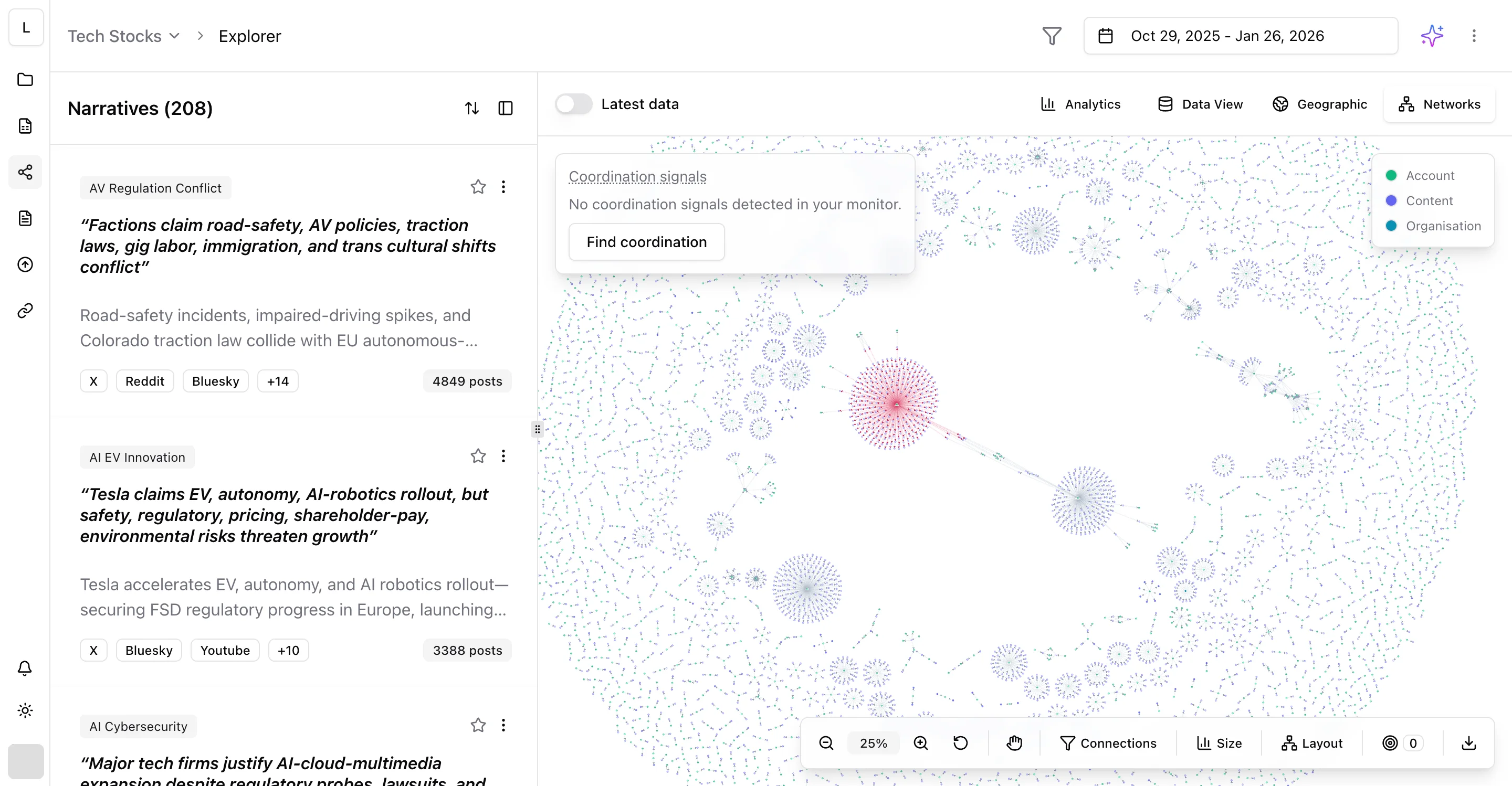
Two roles, one product path: rebuild an unsupported intelligence frontend, make its reporting contracts explicit, then ship an AI interface used by threat analysts.
- My role
- Principal Frontend Engineer, then Principal AI Product Engineer
- Engagement
- Full-time at Logically
- Stack
- Next.js, TypeScript, Vercel AI SDK, MCP
- 6 months
- Rebuild to production
- Days to minutes
- Routine UI change time
- Several each day
- Production releases
SITUATION / RESPONSIBILITY
A live platform that could not pause for a rewrite.
Logically Intelligence depended on an unsupported Create React App frontend with product rules embedded in the interface. The team still had to support the existing platform while building its replacement.
As Principal Frontend Engineer, I architected and built most of the v2 frontend with one other engineer. I led five frontend engineers and coordinated the architecture with three backend engineers and five data scientists. I later moved into the Principal AI Product Engineer role and co-built the production Agentic Chat experience.
KEY DECISIONS
Make each boundary testable before adding more intelligence.
- 01
Replace the unsupported frontend without replacing the platform
The team rebuilt the Create React App frontend as a multi-page Next.js product while keeping the existing backend services in place. That limited the migration boundary and let the old product continue serving customers.
- 02
Move report rules behind typed APIs
A contract-driven path moved report construction out of React and through backend APIs to Databricks. Orval-generated clients and Zod validation removed duplicated frontend rules and made failures visible at the boundary.
- 03
Connect the AI interface to production tools
The production Agentic Chat used the Vercel AI SDK to call Databricks threat-analysis and person-lookup capabilities through MCP tools and the typed application API.
- 04
Instrument model calls before tuning the interface
Call logging exposed a React effect that triggered thousands of unintended model calls at a cost of about £500. The team could trace the source and stop the waste because each call had evidence attached.
PRODUCTION RESULT
Six months to production, then several releases a day.
Routine interface changes fell from days to minutes. Every pull request received a Vercel preview and automated GitHub Actions checks, and merging released the application. The same product later carried a production LLM interface connected to the organisation’s threat-analysis tools.
Open to upcoming contracts · Remote UK
Have a similar challenge?
I’m Dave Hudson. I join teams to build and improve web products, with production AI where it helps. Contracts through Applification Ltd.