ERUPTIVMARCH TO AUGUST 2024
Back to Client workBuild the whole recruitment frontend. Put it live in four months.
Contracted through Eruptiv to build a greenfield Next.js product for Client Server against an existing API by one frontend engineer working with an API engineer and designer.
- My role
- Sole frontend engineer
- Engagement
- Contract through Applification Ltd
- Stack
- Next.js, TypeScript, Storybook
- 3 months
- Frontend built
- 4 months
- Production release
- 1
- Frontend engineer
- 3
- Core disciplines
SITUATION / RESPONSIBILITY
The backend existed. The customer product did not.
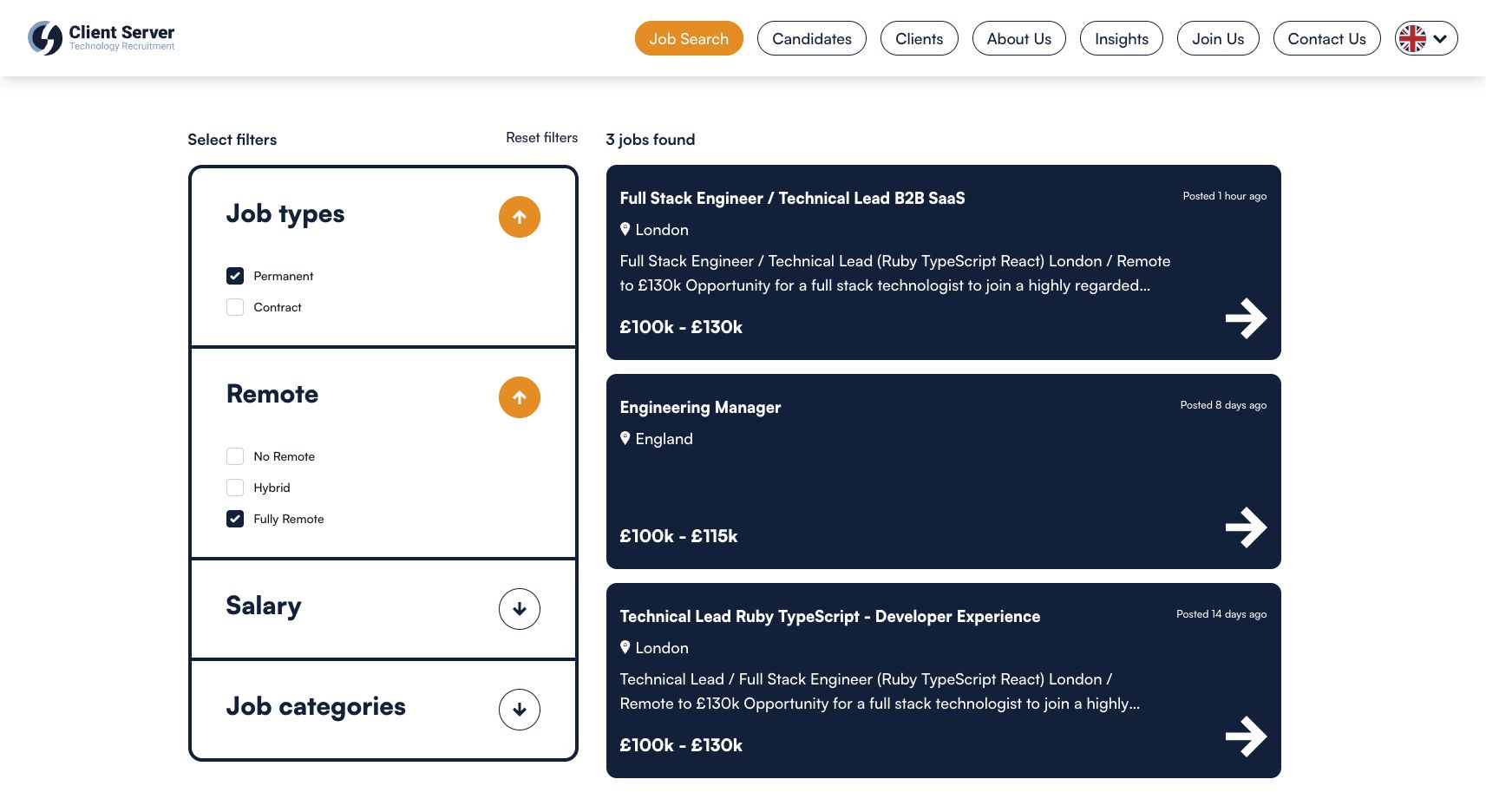
Client Server needed a new recruitment platform around an existing API. Recruiters had to publish roles and track applicants, while candidates needed to search for jobs and apply.
As the sole frontend engineer, I owned the web architecture and implementation. I worked directly with the API engineer and designer, keeping the integration boundary clear while the product took shape.
DELIVERY PATH
- 01Existing API
- 02Typed interface
- 03Storybook states
- 04Production
KEY DECISIONS
Keep design, components and API integration independently testable.
- 01
Build around the existing API contract
The frontend used the API already in place instead of widening the project into a backend rewrite. That kept the work focused on the recruiter and candidate journeys needed for release.
- 02
Use TypeScript across the interface
Next.js and TypeScript gave the greenfield product one typed structure for pages, components and API integration. A single frontend engineer could change the product without chasing hidden dependencies.
- 03
Put component states in Storybook
The designer could inspect and test interface states before they were connected to live data. Design review happened at the component boundary, where changes were cheaper to make.
- 04
Use the fourth month to reach production
The complete frontend was ready after three months. The fourth month connected the final release work and took the recruitment platform live.
PRODUCTION RESULT
Three months to a complete frontend. Production after four.
The finished product let recruiters publish jobs and track applicants, and let candidates search and apply. The component architecture also left a practical handoff: the designer could review states in Storybook and future changes had clear places to land.
Open to upcoming contracts · Remote UK
Have a similar challenge?
I’m Dave Hudson. I join teams to build and improve web products, with production AI where it helps. Contracts through Applification Ltd.